
On this page
People should be able to understand the law, use public services and make themselves heard in their own language. ECMI Kosovo works on the skills, legal protections and public accountability needed to secure that access. Our contribution spans law drafting, language learning, translation and research into the barriers communities face.
Helping write the language protections
ECMI helped draft Kosovo’s Law on the Use of Languages in 2005. We helped establish the drafting working group within the Ministry of Public Services, brought comparative language-rights expertise into the process, and worked through contested provisions with local and international experts, UNMIK and community representatives. A joint drafting meeting in what is now North Macedonia was part of this work. The law was adopted in 2006.
The work continued after adoption. Our January 2011 Policy Study on the Use of Languages examined how the legal guarantees operated in central and municipal bodies and how communities experienced them. It addressed language skills, translation and interpretation, public information and access to services, setting out changes needed to make the law effective.
Language capacity in public institutions
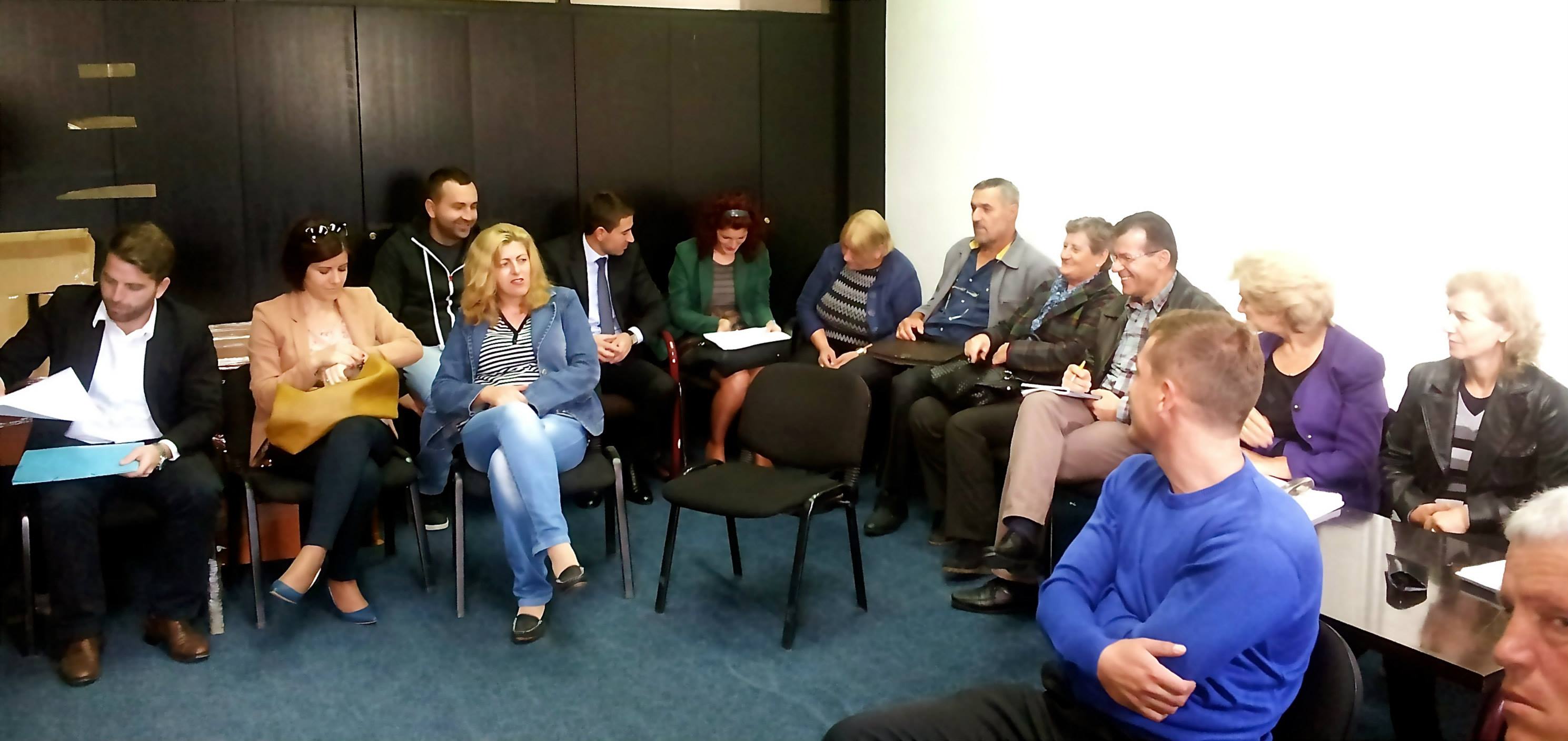
Across successive phases from 2011 to 2017, we provided Albanian and Serbian courses for municipal officials in seventeen municipal settings, with support from the OSCE High Commissioner on National Minorities. Courses in ten municipalities reached 258 participants in 2013. In 2014, 21 courses across thirteen municipalities reached 281 participants.
We assessed learning needs, recruited and briefed teachers, developed teaching approaches and tested skills relevant to municipal work. Joint classes brought Albanian- and Serbian-speaking officials together to practise conversations encountered at work and in daily life, with support from municipal leadership and the Office of the Language Commissioner.
Making language commitments accountable
ECMI and the Office of the Language Commissioner also developed tools to assess whether public bodies met their language obligations. A 2013 pilot at the Assembly of Kosovo examined language services, staffing, resources and the quality of legislative translation. In 2014, our monitoring work expanded to municipal and central levels. A matrix of 28 indicators and six targeted questionnaires helped language focal points gather comparable evidence on services, personnel and resources.
Through the Consultative Council for Communities’ language working group, we brought community concerns about public documents, community languages and access to services into policy discussion and follow-up.
Equal linguistic quality of the law
Through the EU-supported Equal Rights for All Coalition (ERAC), a project led by ECMI Kosovo with partner organisations, we examined the consequences of inconsistent legal texts. The 2018 report Towards Equal Linguistic Quality of Kosovo Legislation into Albanian and Serbian Language addressed the effects on equal access to rights and justice. A conference in December brought the findings into discussion with the Language Commissioner, the EU Office and other stakeholders.
A second ERAC paper, Supporting Serbian and Albanian Language Proficiency amongst Kosovo Municipal Civil Servants, published in November 2018, drew on our experience of language teaching. It proposed sustained language education, training within the public service, job-relevant teaching materials and more reliable assessment of language skills.
By the end of April 2021, ECMI’s expert translators had reviewed 183 laws for linguistic inconsistencies. They compared Albanian and Serbian texts, checked terminology against English versions and developed material for a legal terminology resource, creating a basis for corrections that affect how rights and obligations are understood.
Language rights require investment in qualified translation, language learning and accessible information, with clear responsibility for responding to complaints. Our legal expertise, teaching experience and work with communities inform that continuing effort.