
On this page
ECMI Kosovo works with informal collectors, municipalities, utility companies and recycling businesses on systems that recover materials and support livelihoods. Our work combines research with equipment, training and agreements between those responsible for collecting, sorting and processing waste.
Building on the work of informal collectors
Informal collectors already recover materials that would otherwise be discarded. Many face insecure earnings, limited equipment, unsafe working conditions and weak recognition in formal waste management. We work to strengthen their position, including that of Roma, Ashkali and Egyptian collectors.
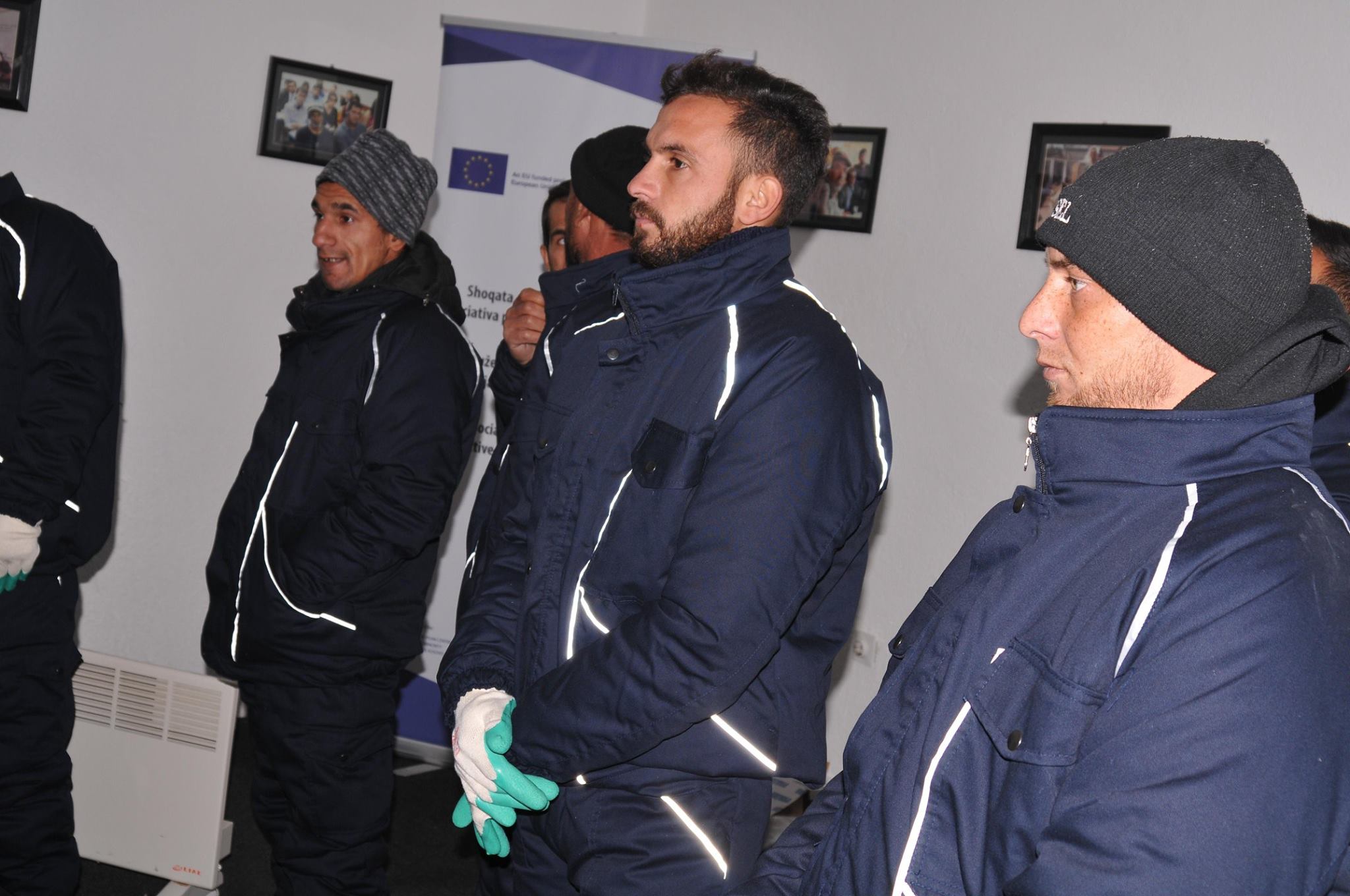
The EU-supported project Increasing Employment of Roma, Ashkali and Egyptian Communities through a Recycling Collective, implemented in 2014–2016, combined skills development with equipment and collection infrastructure. It built on collectors’ existing livelihoods and business practices.
Understanding the recycling economy
Our 2019 report Informal Waste Collection and Recycling examined relationships between collectors, buyers, public bodies and the recycling economy. It addressed working conditions, income, equipment, child labour and social-enterprise opportunities alongside environmental policy.
The Peja waste research, published in April 2025, examined waste composition and seasonal variation to identify opportunities to reduce disposal and improve recovery. These studies bring collectors’ circumstances and the management of materials into the same discussion.
Recycling Matters: connecting communities, municipalities and businesses
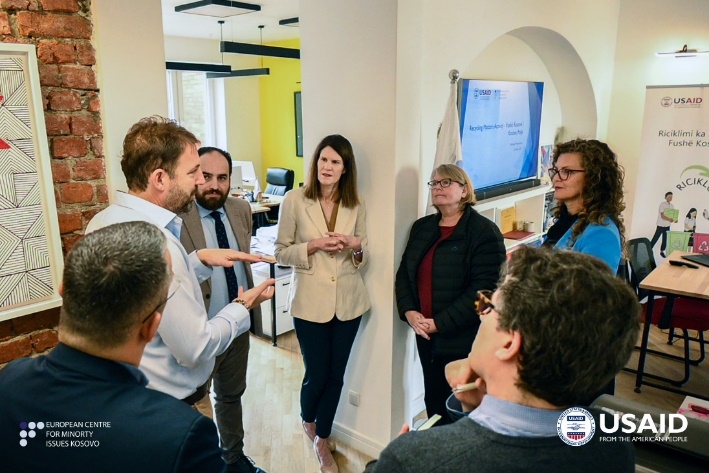
The USAID-supported Recycling Matters model in Fushë Kosovë/Kosovo Polje brings informal waste collectors, the municipality, RWC Pastrimi and Recycling Zone LLC into a shared framework for collection, separation and processing. The model links the inclusion of Roma, Ashkali and Egyptian collectors with material recovery and local economic opportunity.
ECMI Kosovo’s contribution spans baseline and business-model research, a community stakeholder forum, a four-party cooperation agreement, processing machinery, equipment and training. The Green Fund Facility is the model’s community-initiative component, with a focus on local recycling ideas and practical application and project-development support.
The institutional framework sets out responsibilities for separated-material collection, processing, collector participation and commercial viability. Municipal commitment and coordination between public services, the private operator and community representatives are central to the model.
Recycling Matters includes 943 waste containers supplied in December 2024: 470 of 1,100 litres and 473 of 240 litres. A four-party Memorandum of Understanding between ECMI Kosovo, the Municipality of Fushë Kosovë/Kosovo Polje, RWC Pastrimi and Recycling Zone LLC sets out their management and use.
For Recycling Zone LLC, the December 2024 milestone includes eight workers under formal employment contracts and 17 agreements with informal waste collectors from Roma, Ashkali and Egyptian communities.
The Green Fund Facility’s 2024 call covers grants of up to €10,000 for local recycling and social-inclusion initiatives by civil-society organisations, activists and informal waste collectors. Its application period: 30 September–8 November 2024. The application package includes guidance on project planning, proposal writing and financial management.
Cross-border Green Deal: improving environmental services
In 2023–2025, ECMI implemented the Kosovo component of Cross-border Green Deal, an EU-funded IPA cooperation project with FORS Montenegro and the Municipality of Berane. The Kosovo project area covered Peja, Istog, Klina, Deçan, Junik and Gjakova.
Work with public utility companies combined staff training, waste-management research and exchange of good practice. In April 2025, ECMI reported handing over equipment valued at €84,740 to regional public cleaning companies: waste containers, composting equipment, protective work clothing and air-quality measurement devices.
School workshops and a cross-border drawing competition involved young people in environmental learning. Alongside the Peja waste-composition research, a publication on EU good practice offered resources for improving local services. The programme addressed broader environmental services as well as complementing our work with informal collectors.
Making environmental support accessible
The first energy-efficiency subsidy call had 120 applicants from non-majority communities among 5,992 applicants overall — about 2%. ECMI Kosovo worked with CDF and the Ministry of Economy to widen access, preparing application guidance in Romani, Turkish and Bosnian and advocating more time to apply.
Ministry data recorded non-majority communities’ share of applicants rising to nearly 10% in the second call. The response combined accessible information, community outreach and engagement with those responsible for the scheme.