
On this page
Women’s priorities shape our work on income, safety, public services and participation. We work with Roma, Ashkali, Egyptian and Serb women, local organisations and specialist partners through business support, community-based rights assistance, research and engagement with decision-makers. Language, mobility, education and care responsibilities all affect whether that support is usable.
Economic empowerment: from training to practical support
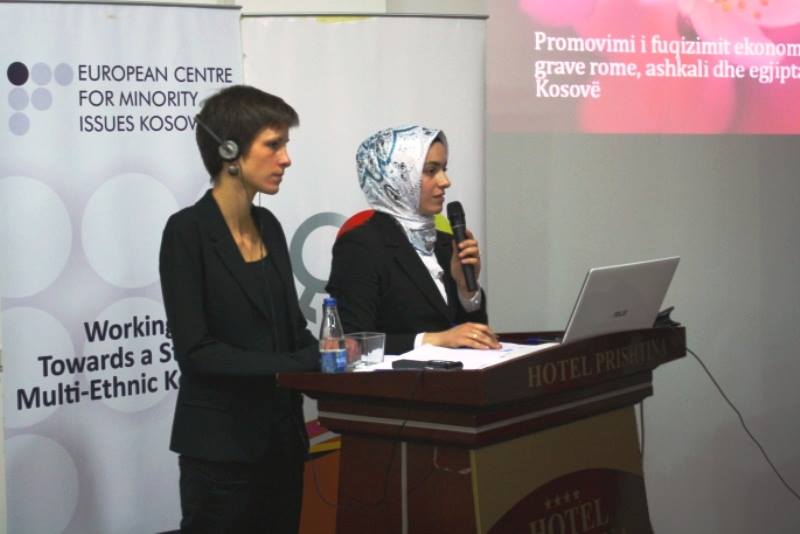
In 2013, ECMI worked with the Network of Roma, Ashkali and Egyptian Women Organisations of Kosovo on women’s economic participation. Consultation on women’s experience, skills and business ideas shaped professional and entrepreneurship training. Selected participants received help with business plans, funding applications and equipment or materials for their activities.
Eight women received individual coaching and in-kind support; two participants initiated small businesses. Local roundtables brought women together with public bodies and civil society to discuss barriers and available support. Our economic-empowerment research documents this experience.
UN Trust Fund: women’s safety and community-based support
Empowering Minority Communities in Kosovo Against Gender-Based Violence was a major strand of ECMI Kosovo’s work with women. Supported by the United Nations Trust Fund to End Violence against Women in 2014–2015, it brought together ECMI, AKTIV, the Network of Roma, Ashkali and Egyptian Women’s Organisations of Kosovo, and CLARD. The programme worked with Roma, Ashkali, Egyptian and Serb women in Ferizaj, Fushë Kosovë, Gračanica and Mitrovica North.
Eight local women were trained and engaged as community-based paralegals. With specialist support, they helped women understand their rights and reach legal assistance, police, health and social services, protection procedures and shelters. Rights education and skills training accompanied work with teachers, students and men on gender equality and violence.
This work also strengthened how ECMI handles sensitive information. Training and support from the UN Trust Fund helped staff develop confidentiality, coded case recording and identity-protection practices. Reports used codes rather than names, with identifying information kept separately and access restricted. Women’s safety and decisions guided how concerns were discussed and support was offered.
The experience helped embed a survivor-centred approach in our work: listening without pressure, recognising risks, protecting privacy and linking women with qualified services. It remains an important foundation for our wider work on women’s rights, economic participation and access to support.
The programme’s baseline research combined quantitative and qualitative inquiry into vulnerability, economic circumstances, knowledge of rights and access to support. It provided an evidence base for work with women and the organisations responsible for protection and services.
In 2012, ECMI and the Centre for Legal Aid and Regional Development (CLARD) published a joint policy brief on delays in issuing protection orders in domestic-violence cases, with recommendations for courts and the Kosovo Judicial Council. The work used experience of seeking protection to identify failures in the response.
Participation that women can use
During the 2009 decentralisation programme, we worked with local women’s organisations on eight roundtables and two focus groups in emerging municipalities south of the Ibar. Women’s priorities included employment, transport, childcare, services, information and participation in the new local structures.
Participation also depends on language, confidence and a safe opportunity to speak. Work with families and community leaders can address obstacles while respecting women’s own decisions. Trusted local intermediaries help explain procedures and find the appropriate service.
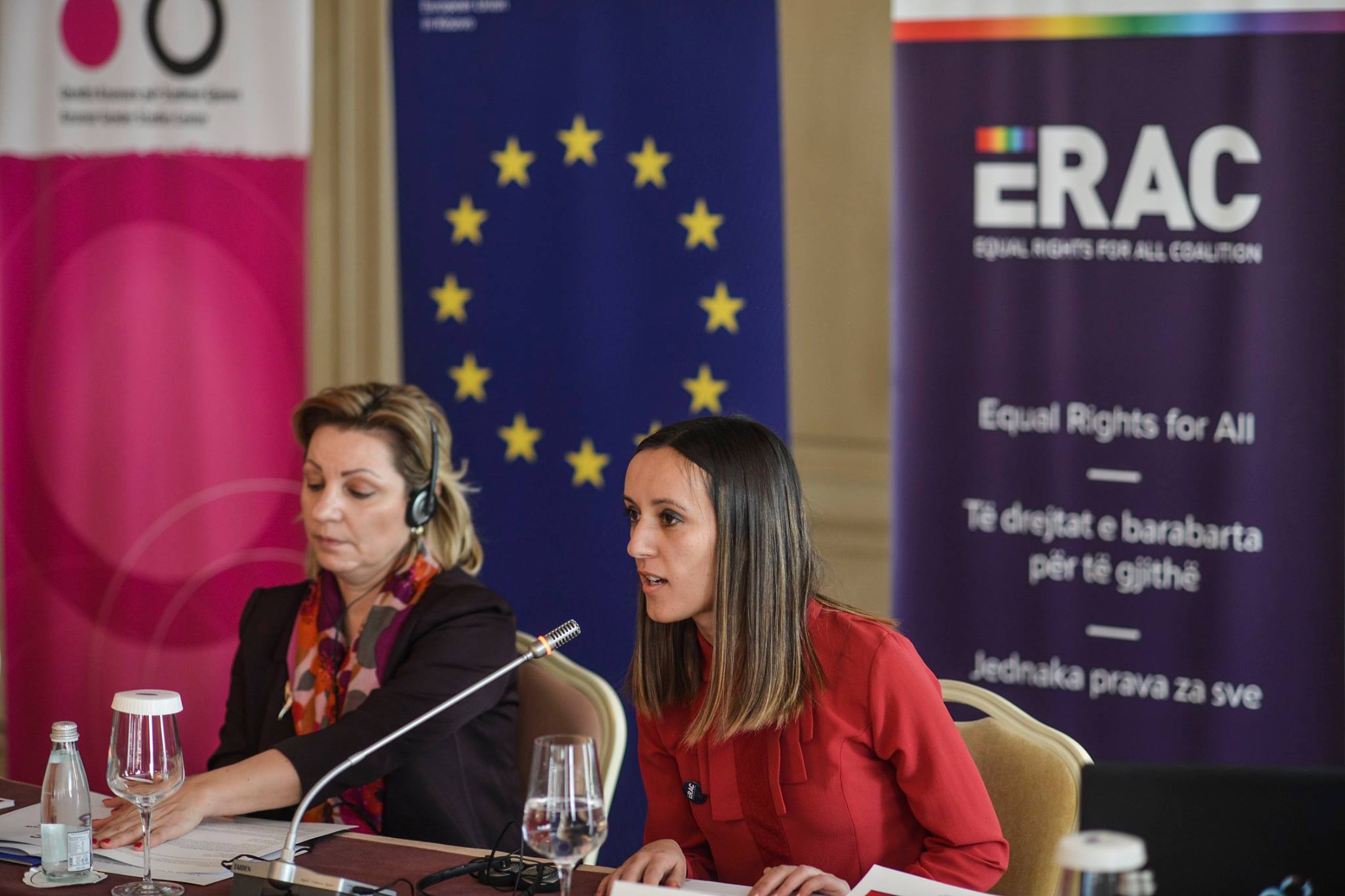
Within the EU-supported Equal Rights for All Coalition (ERAC), an ECMI Kosovo-led project, the Kosovar Gender Studies Center led studies on women’s participation in decision-making, gender quotas on corporate boards and police responses to gender-based violence. ECMI coordinated the coalition, supported dissemination and brought findings into discussion with public bodies, drawing on the specialist expertise of its partners.
Reproductive health and access to services
Through CARES and CARES 2, ECMI worked with FORS Montenegro, health institutions and community organisations on reproductive-health information and services. Research with women, cooperation with family medicine centres, prevention activities and support to health-service capacity informed the work. CARES 2 also delivered medical equipment to hospitals and family medicine centres and organised information activities on preventive examinations. The programmes gave particular attention to socially vulnerable women, including women from minority communities and rural areas.
Gender in recycling and economic inclusion
Recycling Matters included a gender analysis and action plan on women’s position in waste management and recycling. It examined barriers to employment, participation, decision-making and access to resources and set out how gender considerations could be incorporated into programme activities. Women’s involvement in consultation and waste collection and sorting was also part of the work, placing economic participation within an environmental and municipal-services programme.